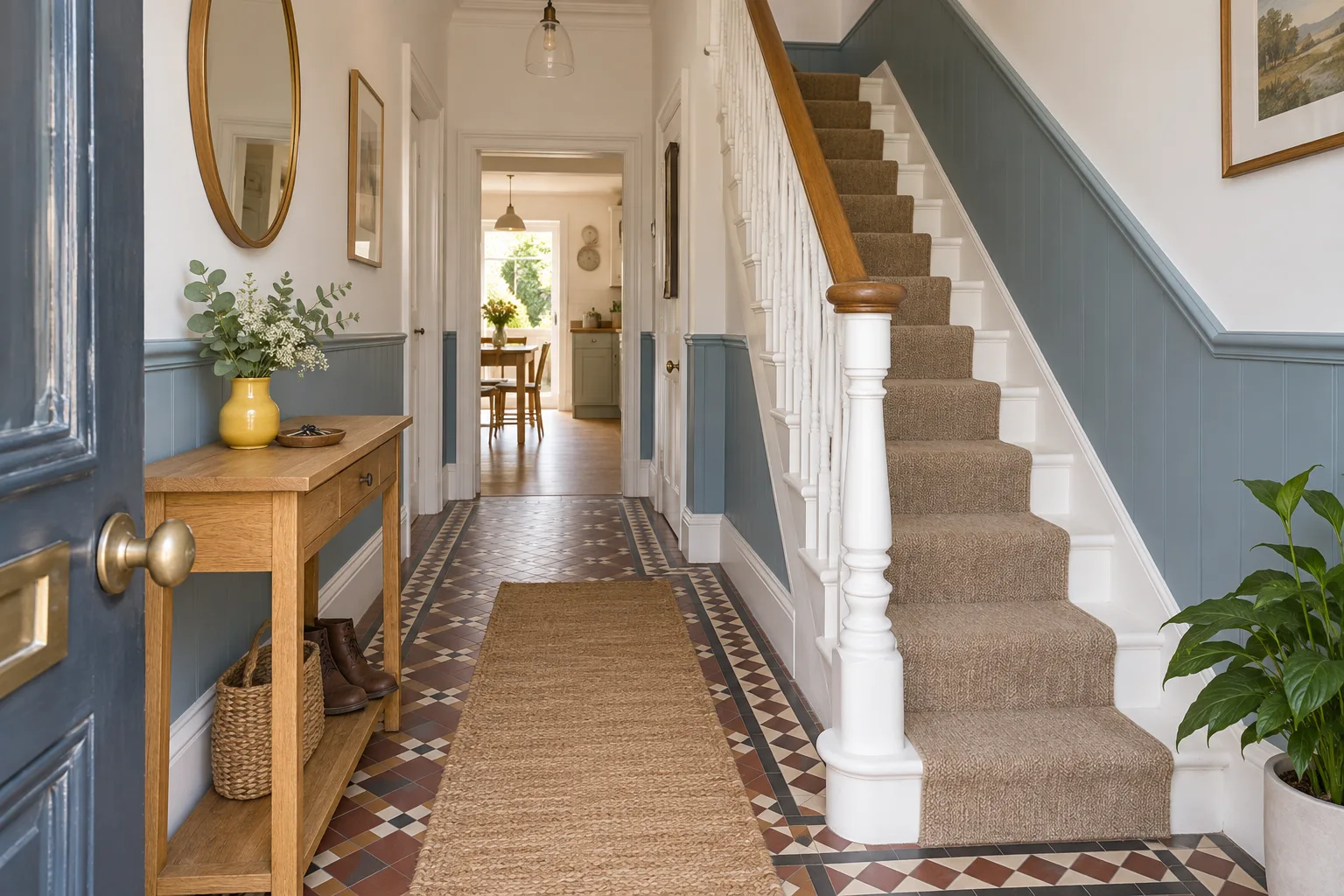
Look at what the hallway has to handle
A hallway is a working route, not a quiet display wall. Coats brush past corners, bags catch trim, shoes mark the lower wall, and doors interrupt almost every surface. Before choosing colour, note where the existing finish has failed and whether the cause is impact, movement, moisture, or poor preparation.
Check the surface in daylight
Open the doors and look along the wall rather than straight at it. Side light makes dents, ridges, loose filler, and uneven sheen easier to see. Pay particular attention to:
- cracks around door frames and changes of material;
- flaking paint near frequently touched edges;
- old wall plugs, picture holes, and cable routes;
- gaps where trim meets the wall;
- stains that may need investigation before decoration.
A decorator can then separate ordinary preparation from a repair that needs another trade.
Plan movement through the home
Decide how the household will use stairs, bedrooms, and the front door while paint dries. Agree which section is completed first, where tools can be kept safely, and how children or pets will be separated from wet surfaces. Clearing hooks, small furniture, and fragile objects before the visit protects them and leaves more time for preparation.
Sample colour where it will live
Hallway light changes sharply from the front door to the landing. Put generous samples on more than one wall and view them morning and evening. Check the colour beside flooring, woodwork, and adjoining rooms. The best choice is the one that stays calm through those transitions, not simply the swatch that looked strongest in a shop.